Katinonkwat Lodge 93
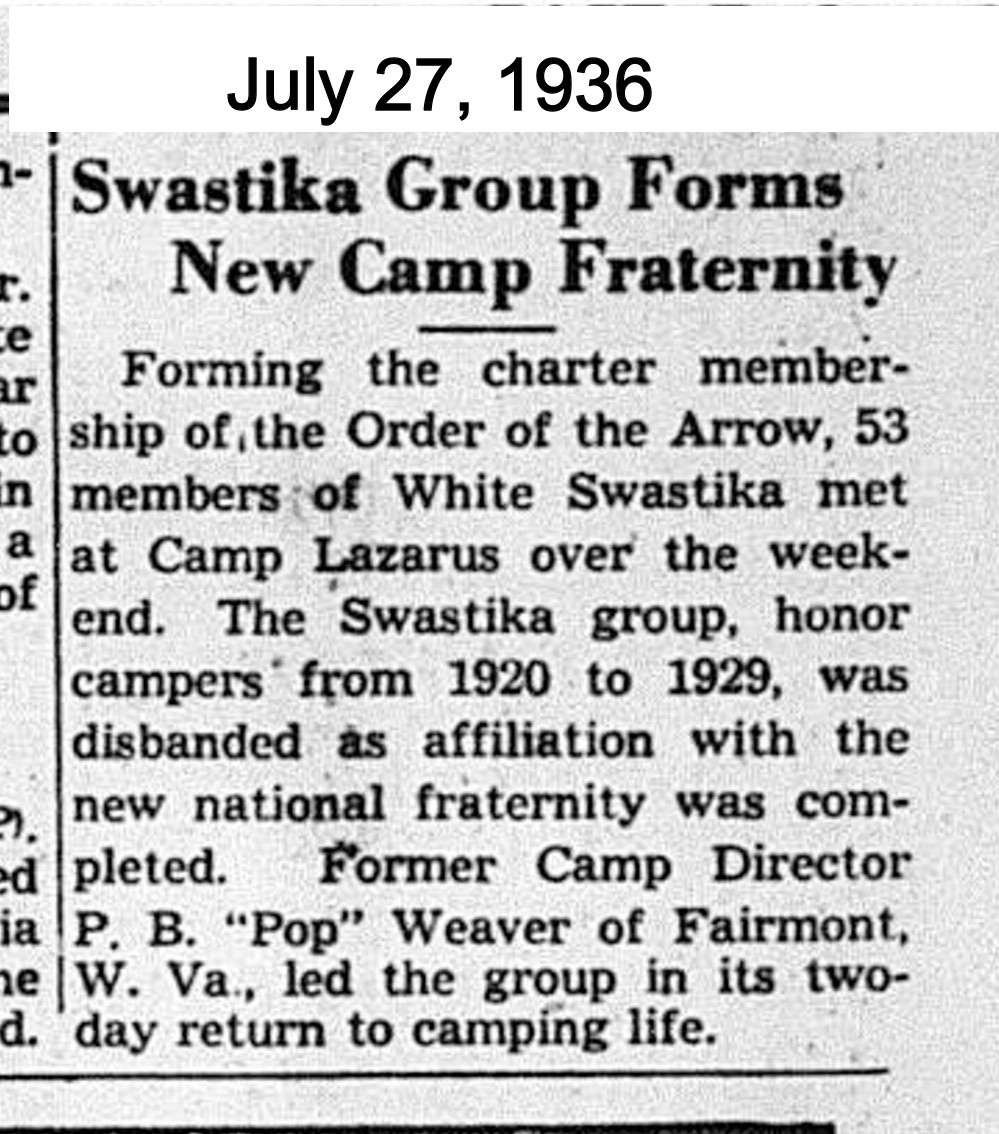
In the early 1930s, the Order of the White Swastika that had been in use at Camp Burroughs and Camp Lazarus was struggling as a camp honor society. At the same time, the rise to power of the National Socialist Party in Germany and their adoption of the swastika as their emblem created strong negative feelings against the ancient symbol.
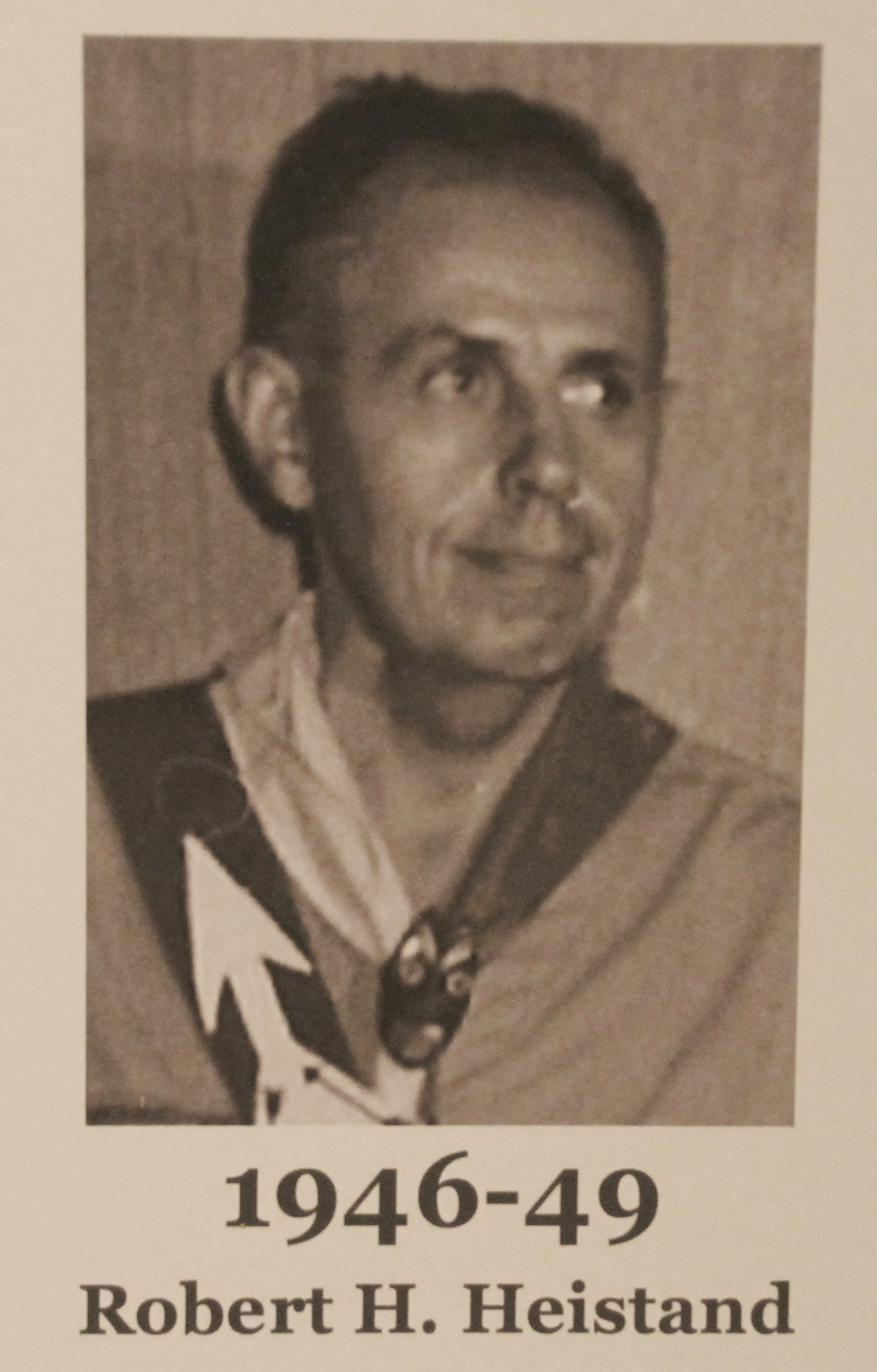
It was about this same time that Robert H. Heistand arrived in Columbus to assume the role of Scout Executive for the Central Ohio Council. Heistand was already a member of the Order of the Arrow at the time, having been inducted as a member of Pohopoco Lodge 44 in Allentown, Pennsylvania. While there is no written evidence to confirm that Heistand was the driving force behind establishing the Order of the Arrow in central Ohio, there seems to be little doubt that his experience with the organization and desire to expand it were instrumental in the creation of Katinonkwat Lodge.
Heistand’s dedication to the OA extended beyond Katinonkwat Lodge. At the 13th National Meeting in 1940 he was elected National Treasurer during the Order’s 25th Anniversary. Due to the war, there would not be another National Lodge Meeting until August 1946, by which time Heistand had moved to Baltimore Area Council (in 1942), where he revived a fading Nentico Lodge. In 1946, he was elected National Chief, the last adult to hold that title.
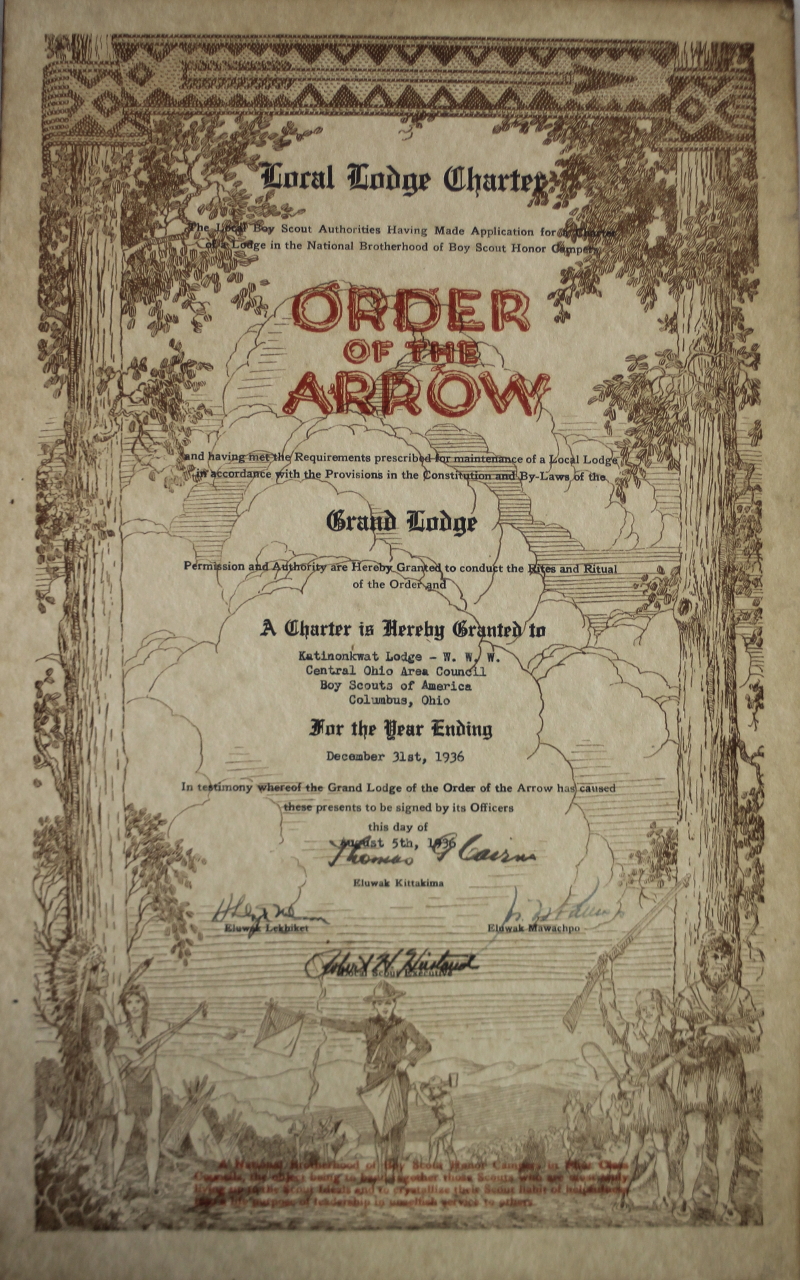
Katinonkwat Lodge was formed in the summer of 1936, when members of the Order of the White Swastika were inducted as charter members, along with campers from that season. Katinonkwat Lodge was the first Order of the Arrow lodge official organized in Ohio. Cuyahoga Lodge 17 was initially planned in 1924, at which time a number was reserved for it, but was not actually chartered until 1955.
The first induction took place at Camp Lazarus on July 24, 1936. The lodge received its first charter on August 5, 1936, from what was then called the Grand Lodge of the Order of the Arrow.
The reasons for selecting the lodge’s name are not known. According to a circular published by the Smithsonian Institute’s Bureau of American Ethnology in 1915 and again in 1926, katinonkwat is a Huron word meaning “heart’s desire.” The circular was published specifically to provide possible Indian names for organizations and camps, and it is entirely possible that it was from this source the name was selected.
The Katinonkwat Lodge totem was the thunderbird, known by the affectionate nickname “George.” The thunderbird had previously served as the totem for the Order of the White Swastika at Camp Lazarus (and possibly Camp Burroughs).
The first Lodge Chief was Jake Helm, who had also served as the last Chief of the Order of the White Swastika at Camp Lazarus.
In 1942, Katinonkwat inducted its first Brotherhood members.
There is some disagreement over who was the first Vigil Honor member of Katinonkwat. According to long established lodge oral history, the first Vigil was Roman Eyerman, inducted in 1946. However, the lodge has records of two earlier Vigils: Robert Heistand in 1938 and J. Howard Kautz in 1940. As discussed earlier, Heistand was already a member of the OA before arriving in Ohio. National records clearly indicate that he received his Vigil in 1938 at the national meeting as a member of Lodge 93.
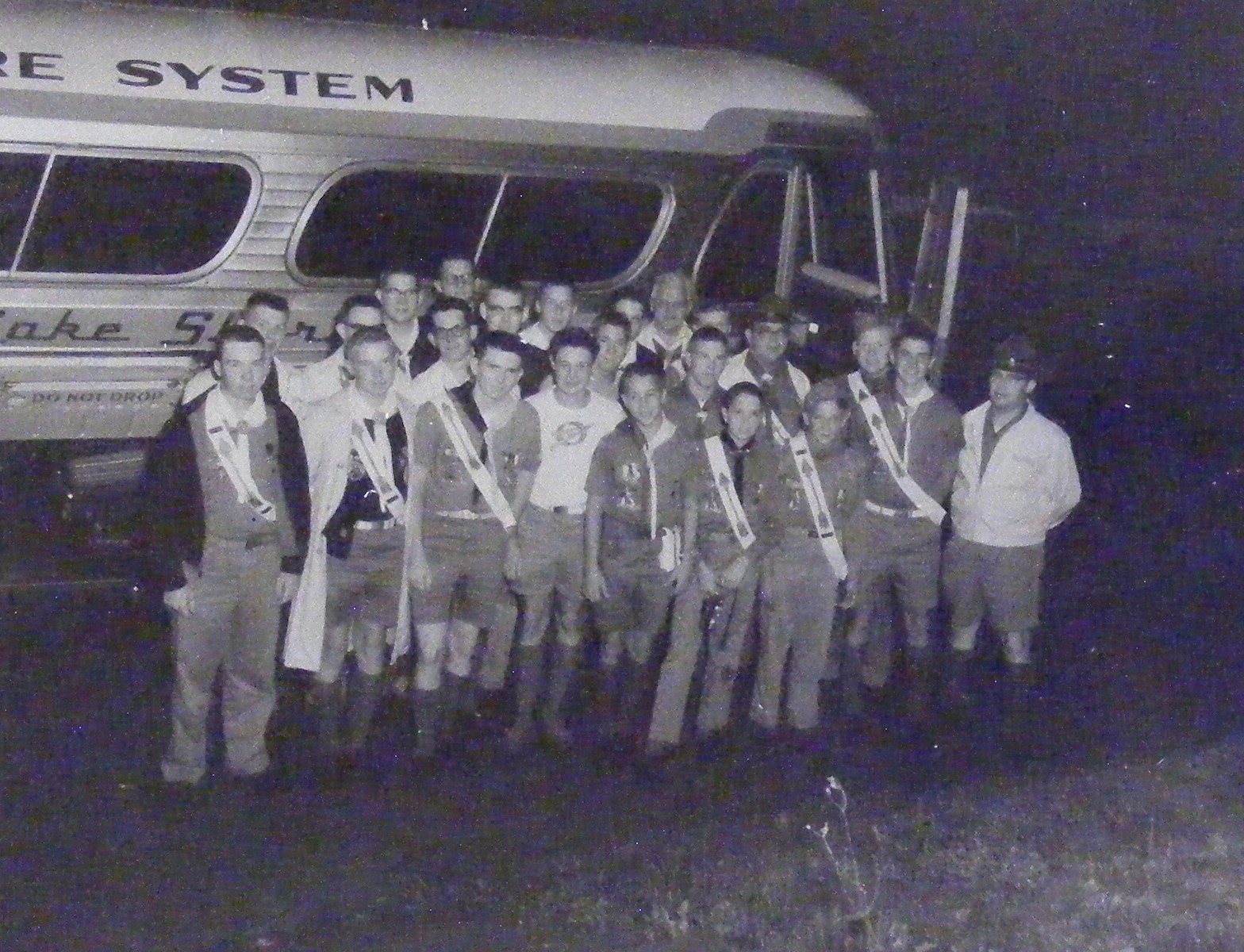
Given a proven earlier induction in the lodge, how was Eyerman considered the first Vigil? There is no clear answer. Two likely possibilities exist: either he always said he was first and after a couple of decades everyone believed him because no one could remember otherwise; or he was the first person to be inducted as an Ordeal member in Katinonkwat to receive his Vigil. This second scenario is entirely plausible, given that Heistand was definitely inducted into the OA in another lodge, and no information is yet known about Kautz.
During the first ten years of the lodge, elections were done each week at summer camp with inductions performed at the end of the week. In 1946, the lodge shifted to performing unit elections annually before the summer camp season instead.
By 1962, the lodge membership had grown to around 500 Arrowmen. It was decided at that time to adopt the chapter system, generally with each district having its own chapter.
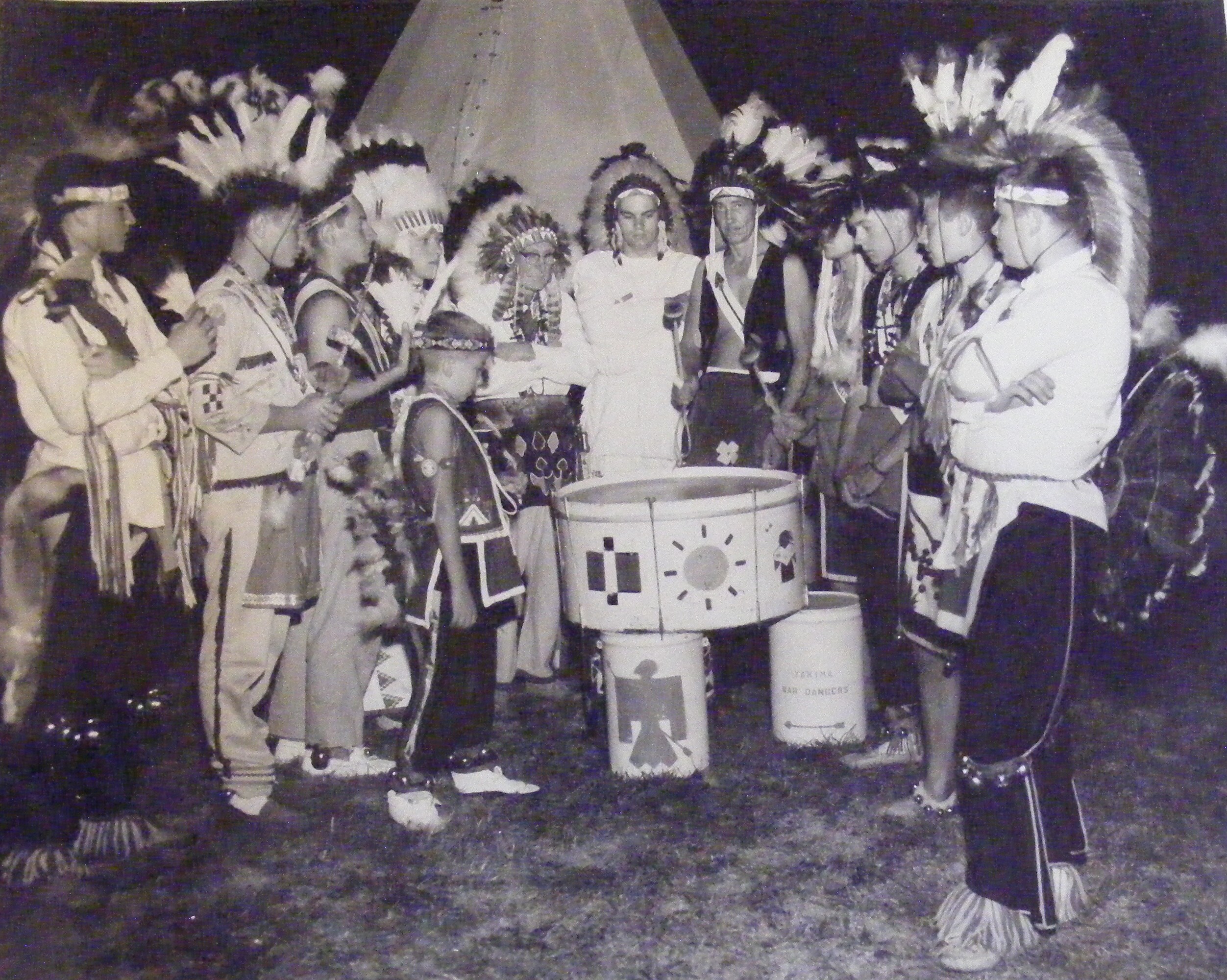
Throughout the 1960s, the lodge continued to grow, reaching nearly 1000 members at times. As the lodge expanded, so did its service to the council’s camps, including the newly established LeVeque Scout Reservation (at first called Greenhills, and opened around 1962). The lodge also regularly held Ordeal weekends in support of non-Scout camps during this period, such as Camp Ki-Y-Ro. In 1968, the lodge hosted the Area 4C Conference at Camp Lazarus. Members Robert Schneider and Lawrence Forsythe served as Chief of Area 4-C in 1966 and 1968, respectively.
In 1973, the lodge’s rules and bylaws saw a major overhaul, including a change to a system of five officers, and to having committee chairmen appointed by the Lodge Chief rather than elected by the entire lodge. Throughout the 1970s, the lodge continued to make major renovations to the council’s camps, including the installation of a new water system at Camp Lazarus.
In 1976, the lodge was one of about ten across the nation to receive the Order of the Arrow’s 60th Anniversary Bicentennial Award, which it won for its display on the life of Ohio Indians of the early 1800s at the Ohio State Fair. By the end of the 1970s, the lodge had published its first “Where to Go Camping” book and its first lodge planbook, as well as hosting the EC-6A Section Conclave at Camp Lazarus in 1979.
In the 1980s, the lodge gained a dominant role at the council’s Boy Scout summer camps, with more than half of the camp staff being OA members, and close to half of the lodge’s officers and chairmen were camp staff members. In 1982, the lodge saw a significant change to its induction process as it implemented the Elangomat clan system. In January of 1983, the lodge voted to donate $2000 to the council’s camp development fund to rebuild the chapel at Camp Lazarus in memory of Vigil Honor member and former Council Vice President for Camping, Robert P. Laux. Work was finished during the 1984 Ordeal season.
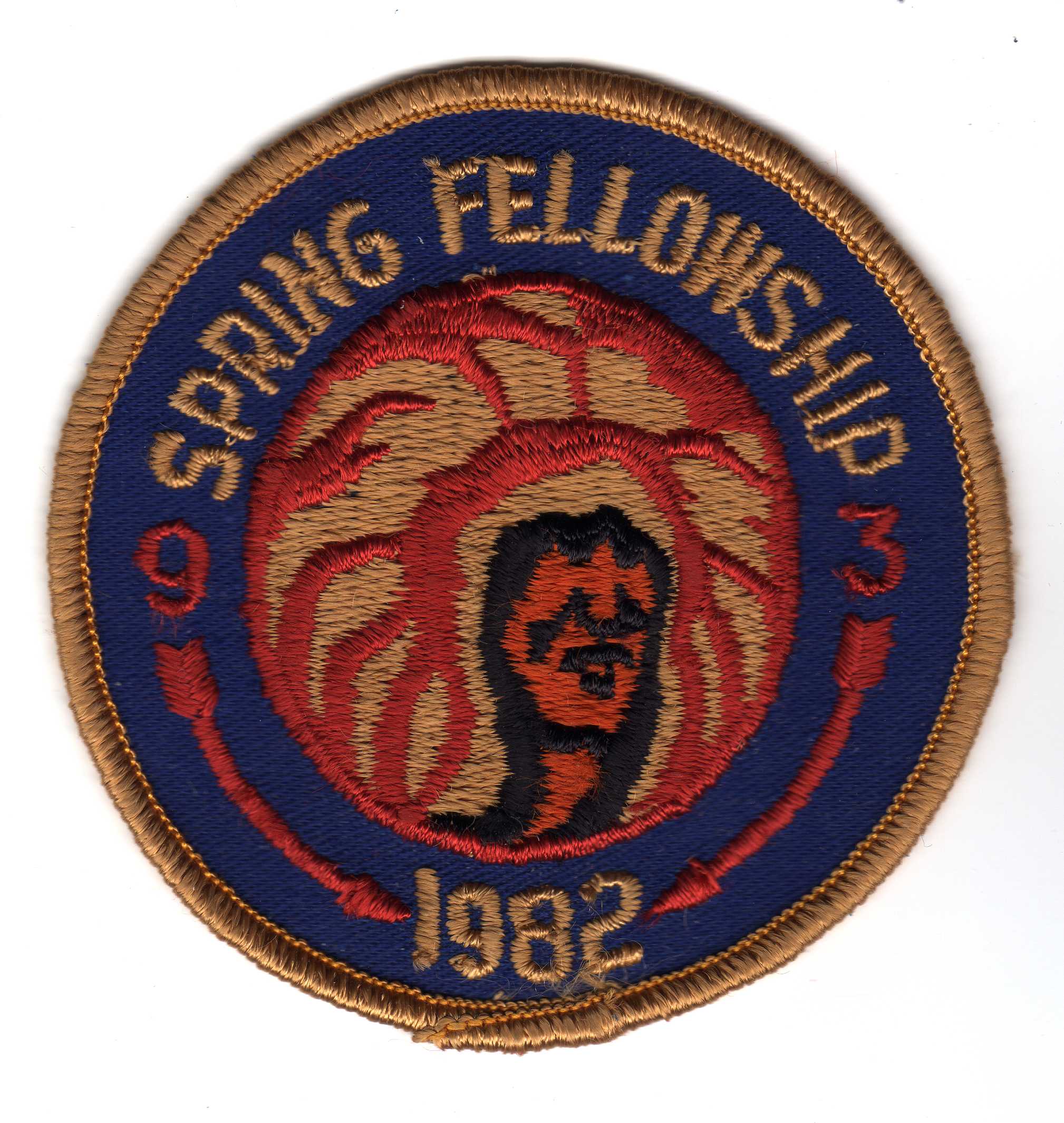
In 1986, Katinonkwat Lodge celebrated its golden anniversary, including once again hosting the EC-6A Section Conclave.
In 1987, Licking County Council merged into Central Ohio Council, and Kaniengehaga Lodge 420 was absorbed into Katinonkwat Lodge. There was a lot of ill will during this process, as Kaniengehaga lost its name, number, and totem. While this hurt the lodge in the short term, the lessons learned during this time were well-remembered and kept firmly in mind throughout 1994 and 1995, as the lodge faced another merger.
On January 1, 1994, Central Ohio Council, Chief Logan Area Council, and Scioto Area Council merged to form the Simon Kenton Council. For two years, all three OA lodges continued to operate independently. During this time, intense negotiations took place to establish the name and identity of a single new lodge to serve the new council. With the absorption of Kaniengehaga still fresh in everyone’s minds, it became clear that a fully equitable merger was the only route to follow.
On January 1, 1996, Katinonkwat Lodge 93 merged with Shawnee Lodge 109 and Maka-Ina Lodge 350 to form Tecumseh Lodge 65.
Last updated 20 April 2021